
What Do the W, S, WS and X Codes Mean?
The cleaning code on a sofa tag tells you which cleaners are safe for the upholstery. W means water-based cleaners, S means solvent only (no water), WS or SW means either is fine, and X means vacuum and light brushing only, with no liquid cleaner at all. Checking the code before you dab water or spray anything helps you avoid water rings, fading and shrinkage.
These codes are common on imported fabric sofas and pieces from larger furniture brands. Many sofas made by local workshops in Vietnam have no tag at all, or the tag only lists the fabric content. You can still work out a safe approach in that case, and we cover how further down.
In our guide to removing coffee stains from a fabric sofa, we said to check the care tag before using water. This article goes further: where to find the tag, what each code means, how to treat stains on each type of fabric and when to call a professional.
Quick Summary
- W: water-based cleaners, using as little water as possible.
- S: no water, only a solvent cleaner made for upholstery.
- WS / SW: water or solvent is fine, but still test a hidden spot.
- X: vacuum and brush only; leave stains to a professional.
Where to Find the Care Tag on a Sofa
The care tag is usually a small sewn-in fabric label with printed text or codes. When our technicians check a sofa in a customer's home, these are the places they look first:
- On the deck under the seat cushions (lift a cushion to see it)
- On the underside of the frame or a fabric flap at the back
- Along the seam next to a cushion's zipper
- In the warranty card, care booklet or the brand's product page
The tag might say something like "Cleaning code: W" or show just a single bold letter. If it has been cut off or faded, or you're not sure what it says, take a photo of it before you treat any stain.
What Each Sofa Cleaning Code Means
The W, S, WS and X system is an upholstery industry convention, separate from the laundry symbols on clothing. Each code only tells you which type of cleaner is allowed. None of them means you can soak or fully wet-wash the sofa.
W – Water-Based Cleaners
W fabrics tolerate water and water-based cleaners such as diluted dish soap or a pH-neutral upholstery cleaner. It's the easiest code to care for, and you'll see it on polyester, other synthetic fabrics and many blended weaves. Even so, use a well-wrung cloth or suds rather than pouring water, because moisture that soaks into the foam can leave a ring as it dries.
S – Solvent Only, No Water
S fabrics can shrink, fade, water-mark or lose their soft feel when they get wet. You'll often find this code on natural fibers like cotton, linen, rayon (viscose) and some velvets. Only use a dry-cleaning solvent made for upholstery, and always test a hidden spot first. Never substitute gasoline, kerosene or strong alcohol for a proper upholstery solvent.
WS or SW – Water or Solvent
WS and SW mean the same thing: the fabric can handle both water-based cleaners and mild solvents. Start with diluted dish soap suds, and only switch to a solvent if an oily stain won't budge. Many microfiber and synthetic-blend fabrics carry this code. Keep moisture to a minimum and dry the area quickly.
X – Vacuum Only, No Cleaners
X is the most restrictive code: no water, no solvent, just vacuuming and gentle brushing with a soft-bristle brush. It's fairly rare and mostly found on specialty decorative fabrics or delicate natural fibers. Any stain on an X fabric should be assessed by a professional before anything is applied.
| Code | Meaning | Safe to Use | Avoid |
|---|---|---|---|
| W | Water-based cleaners | Diluted dish soap suds, pH-neutral cleaner, well-wrung cloth | Pouring water, soaking sprays, hot water |
| S | Solvent only | Upholstery dry-cleaning solvent, vacuuming | Any water, even a damp wipe |
| WS / SW | Water or solvent | Dish soap suds first, solvent for oily stains | Soaking or saturating cushions |
| X | Vacuum only | Vacuum, soft-bristle brush | Water, solvents, stain removers |
Don't Confuse These With Laundry Symbols
Some cushion covers also show a washtub, circle or triangle like the symbols on clothing. Those describe the fabric on its own and don't mean the cover should go in the washing machine. A cover washed separately can shrink and end up a different shade from the other cushions.
How to Treat Stains Based on the Cleaning Code
Whatever the code, the first step is always the same: blot up the liquid with a white cloth, pressing gently without rubbing. After that, the approach depends on the code and the type of stain:
| Stain | W and WS/SW Fabrics | S and X Fabrics |
|---|---|---|
| Coffee, tea, soft drinks | Blot, dab with dish soap suds, then a well-wrung damp cloth | Blot with a white cloth only, no cleaning solution |
| Grease, lipstick, ballpoint ink | Dab with dish soap suds several times; WS fabrics can take a mild solvent | S: upholstery solvent after a spot test. X: don't treat it yourself |
| Sweat, grime on arms and headrests | pH-neutral cleaner, well-wrung cloth, clean the whole panel | Vacuum, brush gently, leave cleaning to a pro |
| Pet or child urine | Blot right away, dab a pH-neutral cleaner; call a pro if it soaked in | Blot right away, call a pro as soon as possible |
| Dust, pet hair | Vacuum with a soft brush attachment | Vacuum with a soft brush attachment |
The detailed dab-and-dry steps for drink spills are in the coffee stain guide linked above, and they work for W and WS fabrics. Whatever the code, use as little moisture as possible and dry the spot quickly with a fan or your air conditioner's dry mode.
What If Your Sofa Has No Tag?
Many workshop-made, secondhand or older sofas no longer have a tag. In that case, assume you don't know whether the fabric can handle water, and take the cautious route:
- Ask the store or workshop that sold it, and send a photo so they can look up the fabric.
- Check the fiber content if it's listed: polyester and other synthetics usually handle water better, while cotton, linen, rayon and velvet are often water-sensitive.
- Spot test a hidden area: dab a little solution on the back of a cushion, wait a few minutes, then press a white cloth on it. Color transfer, a ring or stiff fabric means stop.
- If you're still unsure, just vacuum and blot the stain, then have a professional take a look.
If you're shopping for a new sofa and want one that's easy to care for, ask about the fabric's cleaning code before you buy. Our comparison of leather vs fabric sofas covers durability and care for each.
Common Mistakes When the Code Is Ignored
Using Water on an S Fabric
This is the mistake our technicians see most often. The original stain may come out, but the wiped area dries into a ring, shrinks or feels stiffer than the fabric around it. These marks are often harder to fix than the stain itself.
Assuming W Means You Can Soak It
W only means water-based cleaners are allowed. It doesn't mean you can pour water on it or spray the cushions until they're soaked. Excess water gets into the foam, dries slowly and can start to smell musty in Ho Chi Minh City's humidity. If your sofa smells after a DIY clean, see why a sofa still smells after cleaning.
Reaching for Strong Stain Removers
Bleach, hydrogen peroxide and all-purpose sprays don't fit any of these codes and can strip color from any fabric. Faded patches are almost impossible to restore.
Cleaning Just One Small Spot
On W or WS fabric, cleaning one small spot in the middle of a cushion often leaves a patch that looks brighter than the rest. Lightly clean the whole panel out to the nearest seam so it dries evenly.
When to Call a Professional
Reading the tag tells you what's safe to do yourself. It's time to call a professional if any of these apply:
- ✓The sofa is coded S or X and has a stain that needs cleaning
- ✓There's no tag, and your spot test caused color transfer or a ring
- ✓The stain has been there for days, or 2–3 DIY attempts didn't work
- ✓Urine or a large spill has soaked into the foam
- ✓It's velvet, linen or another expensive fabric you don't want to risk
- ✓The sofa hasn't been cleaned in a long time and the arms, back and seats are all grimy
How Thuan High Clean Handles Each Code
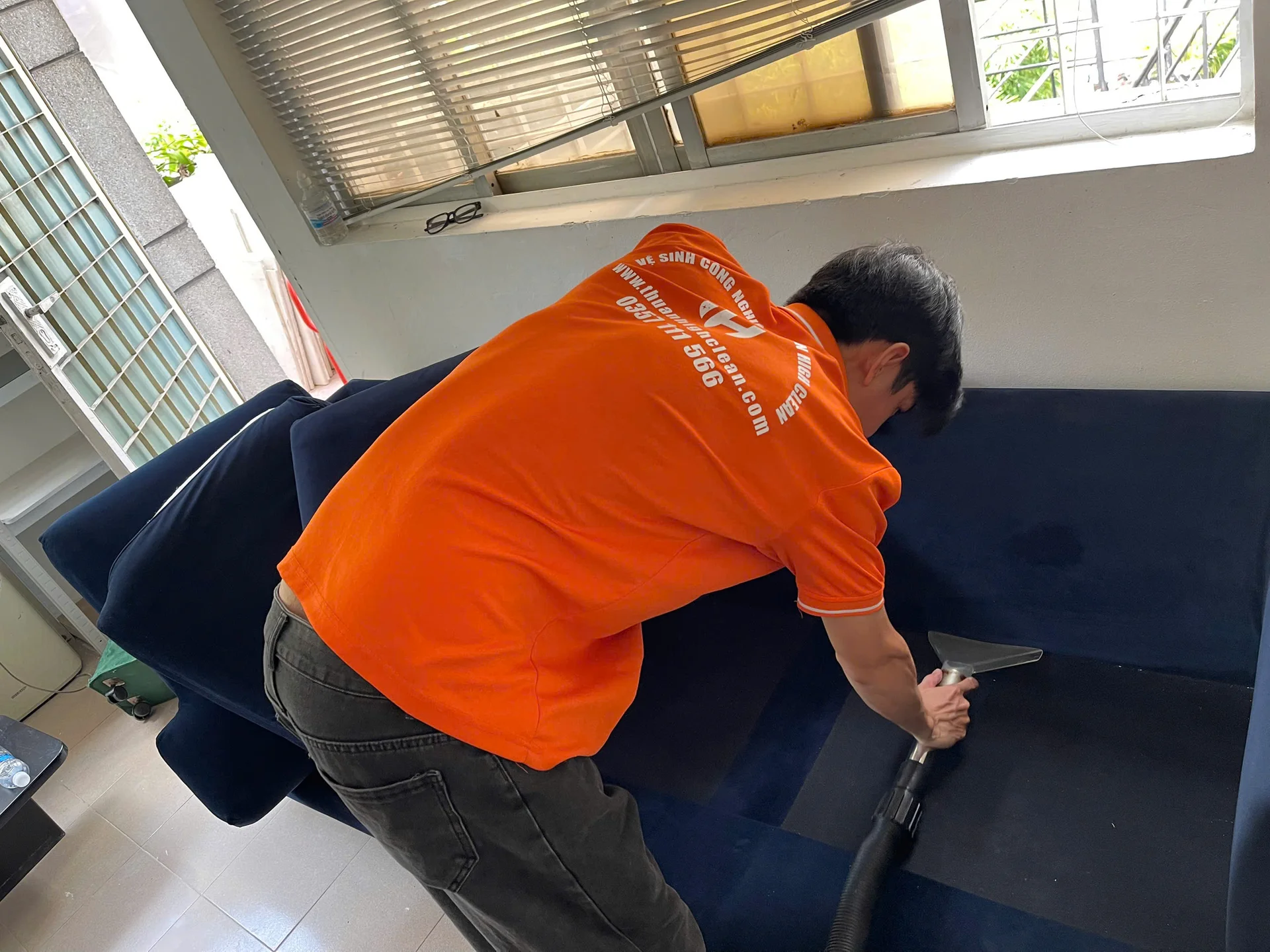
When we arrive, our technician checks the tag and fiber content and spot tests a hidden area before cleaning. For W and WS fabrics, we use a cleaner suited to the fabric, then an extraction machine pulls dirt out of both the fabric and the foam underneath. For S or X fabrics, we explain the options and limits before we start; sometimes vacuuming and surface cleaning is the right call instead of wet cleaning.
We're also upfront about the limits: fabric that has already ringed, shrunk or faded from the wrong cleaner can usually only be partly improved. Sofa cleaning at home costs 300,000 VND for a single seat, 350,000 VND for a 2-seater, 400,000 VND for a 3-seater and 450,000–750,000 VND for an L-shaped sofa. The final price depends on the fabric and its condition; send photos on WhatsApp or Zalo at +84 357 111 566 for an accurate quote before we start.
FAQs About Sofa Cleaning Codes
Need Sofa Cleaning in Ho Chi Minh City?
Not sure which code your sofa has, or already left a ring on the fabric? Send a photo of the tag and the stain on WhatsApp or Zalo at +84 357 111 566, and Thuan High Clean will review it and quote before any work, with no hidden fees. We clean sofas at home across Ho Chi Minh City (Saigon) from 8:00 AM to 5:00 PM, with a free re-clean within 3 days if any odor remains.
"Doan Xuan Thuan Founder of Thuan High Clean"
— This article is based on hands-on experience from our professional sofa, mattress, carpet and curtain cleaning services. Every article is reviewed to make sure the information is accurate, practical and reliable for homeowners and businesses in Ho Chi Minh City.