
Can You Get Coffee Out of a Fabric Sofa?
Yes, and the first 5 minutes make most of the difference. To remove a coffee stain from a fabric sofa, blot it right away with a white towel and don't rub. Then dab on cool water with a little dish soap, working from the outside in, wipe with a damp cloth and dry it quickly with a fan.
A fresh spill mostly sits on the surface of the fabric, so it's fairly easy to lift. Leave it a few hours and the coffee dye bonds to the fibers and seeps into the foam underneath. At that point the stain usually fades rather than disappears, especially with sweetened milk coffee.
In this article, Thuan High Clean walks you through what to do minute by minute, how to check your sofa's care tag before using any water, how to handle dried stains, the mistakes that make a stain spread and when it's time to call a professional.
First 5 Minutes at a Glance
- Blot up the coffee with a white towel or paper towels. Press, don't rub.
- Check the care tag: only use water if it says W or WS.
- Dab cool water with a few drops of dish soap, from the outside in.
- Rinse with a well-wrung damp cloth to remove soap residue.
- Dry with a fan. No hot hair dryer.
Why Are Old Coffee Stains So Hard to Remove?
When our technicians inspect a sofa with a coffee spill, the stain is rarely just on the surface. There are three reasons an old coffee stain is hard to treat:
Coffee Pigments Bond to the Fibers
Coffee contains tannins, the same kind of pigment found in tea. While the spill is still wet, water can pull them out easily. Once dry, and especially once heated, the brown color locks onto the fibers and leaves a stubborn tan mark.
Milk and Sugar Leave Sticky Residue and Sour Smells
Iced milk coffee, bac xiu and other sweetened drinks leave milk protein and sugar in the fabric. Sugar makes the spot stiff and sticky, and it attracts more dirt. In Ho Chi Minh City's hot, humid climate, milk residue can start to smell sour within a day or two.
Liquid Soaks into the Cushion Foam
A full cup of coffee usually soaks through the fabric into the cushion foam. You can clean the surface, but the coffee underneath stays. As it dries, moisture wicks the color back up, and the stain seems to reappear a few days later.
Check the Care Tag Before Using Water
Most fabric sofas have a care tag under the seat cushions or on the underside of the frame, with a cleaning code. Checking it takes less than 30 seconds and can save you from damaging the fabric or leaving a water ring:
| Tag Code | What It Means | How to Treat a Coffee Spill |
|---|---|---|
| W | Water-based cleaners are fine | Follow the steps below |
| WS or SW | Water or solvent cleaners | Follow the steps, use minimal water |
| S | Solvent only, no water | Blot only, then call a pro |
| X | Vacuum and brush only | Blot only, no cleaning solution |
| No tag | Fabric type unknown | Test on a hidden spot first |
To spot test, dab a little solution on the back of a cushion or a hidden flap under the sofa. Wait a few minutes, then press a white cloth on it. If color transfers, or the fabric rings or changes color, stop and stick to blotting only.
How to Remove a Coffee Stain in the First 5 Minutes
Grab these quickly: white towels or plain paper towels, a bowl of cool water, dish soap and another clean cloth. The steps below are for fabric sofas coded W or WS.
Step 1 (Minute 0–1): Blot, Never Rub
Press a towel onto the spill and let it soak up the liquid. Move to a dry section and repeat until the towel picks up almost no brown. Rubbing pushes coffee deeper into the fibers and spreads the stain.
Step 2 (Minute 1–2): Lift the Cushion and Check Underneath
If it was a big spill, lift the seat cushion and check whether coffee ran into the gaps, the underside of the cushion or the frame. Blot those spots too, and slip a dry towel under the stain to catch anything still soaking through.
Step 3 (Minute 2–4): Dab with Cool, Soapy Water
Mix about 1 teaspoon of dish soap into 500 ml (2 cups) of cool water. Dip the corner of a clean cloth, wring it out well and dab the stain, working from the outer edge toward the center so it doesn't spread. Blot with a dry towel every few dabs and repeat until no more coffee comes out.
Step 4 (Minute 4–5): Rinse with a Damp Cloth and Blot Dry
Dip a clean cloth in cool water, wring it out thoroughly and dab the area to lift any soap residue. Leftover soap attracts dirt and leaves a dull patch later. Finish by pressing a dry towel down firmly to pull out as much moisture as you can.
Step 5: Dry It Fast and Brush the Fabric
Point a fan straight at the damp area or switch the air conditioner to dry mode. The faster it dries, the less chance moisture has to pull color up into a ring. Once dry, brush gently along the grain to even out the texture, especially on felt or velvet.
Don't Do This
Don't use hot water, a hot hair dryer or an iron, because heat sets coffee stains. Don't use bleach or hydrogen peroxide on colored fabric. They can strip the dye and leave a pale patch that's harder to fix than the coffee.
How to Treat a Dried Coffee Stain
Dried stains can often be lightened a lot, but they take more patience. A common mix for W-coded fabric is 1 tablespoon of white vinegar, 1 tablespoon of dish soap and 500 ml (2 cups) of cool water. Always spot test before using it on the stain.
| Stain Type | Home Treatment | Watch Out For |
|---|---|---|
| Black coffee, dried a few hours | Dampen lightly, dab the vinegar and soap mix, blot dry | Repeat 2–3 times, don't rub |
| Milk coffee or bac xiu | Dab cool soapy water first, then use the vinegar mix | No hot water, it sets milk protein |
| Sweetened coffee, stiff and sticky | Dampen to dissolve the sugar, dab and blot several times | Rinse well so no sticky residue is left |
| Days-old stain with a brown ring | Try the vinegar mix once; stop if it doesn't fade | Repeated DIY attempts often make a bigger ring |
| S or X coded fabric | Vacuum and brush only | Leave it to a professional |
If a milk coffee stain has been sitting for a while and the sofa smells sour, see Why Your Sofa Smells Bad Even Though It Looks Clean and Why Your Sofa Still Smells After Cleaning to find out where the odor comes from.
Common Mistakes That Make Coffee Stains Worse
Scrubbing Back and Forth
Scrubbing spreads coffee into clean fabric and grinds it into the fibers. On felt, velvet or microfiber, it can also cause pilling or a crushed patch that looks different even after the stain is gone.
Pouring Water on the Stain
This is the most common cause of water rings. Water soaks into the foam, dissolves dirt and coffee underneath, and dries into a brown outline around the wet area. Always use a well-wrung cloth instead of pouring or spraying.
Using Hot Water or a Hot Hair Dryer
Many people assume hot water cleans better, but with coffee it's the opposite. Heat locks tannins and milk protein into the fibers. A hot hair dryer can also shrink the fabric or stiffen the foam.
Using Bleach or Strong Cleaners on Colored Fabric
Bleach, hydrogen peroxide or all-purpose cleaners may fade the coffee, but they fade the fabric too, and a bleached spot is almost impossible to fix. Never mix bleach with vinegar, as it can release toxic gas.
Machine Washing Just One Cushion Cover
Even if the cushion cover has a zipper, it's often there for manufacturing, not for machine washing. Washing a single cover can shrink it, make it hard to fit back on and leave it a different shade from the rest of the sofa.
When to Call a Professional
DIY works well for small, fresh spills. Consider professional sofa cleaning if any of these apply:
- ✓The stain is still clearly visible after 2–3 DIY attempts
- ✓A water ring has formed around the spot
- ✓A whole cup spilled and soaked deep into the cushion
- ✓The sofa smells sour from old milk coffee
- ✓The tag says S or X, or the fabric is velvet or linen that rings easily
- ✓The sofa hasn't been cleaned in a long time, so spot cleaning would leave a brighter patch
How Does Thuan High Clean Treat Coffee Stains on Sofas?
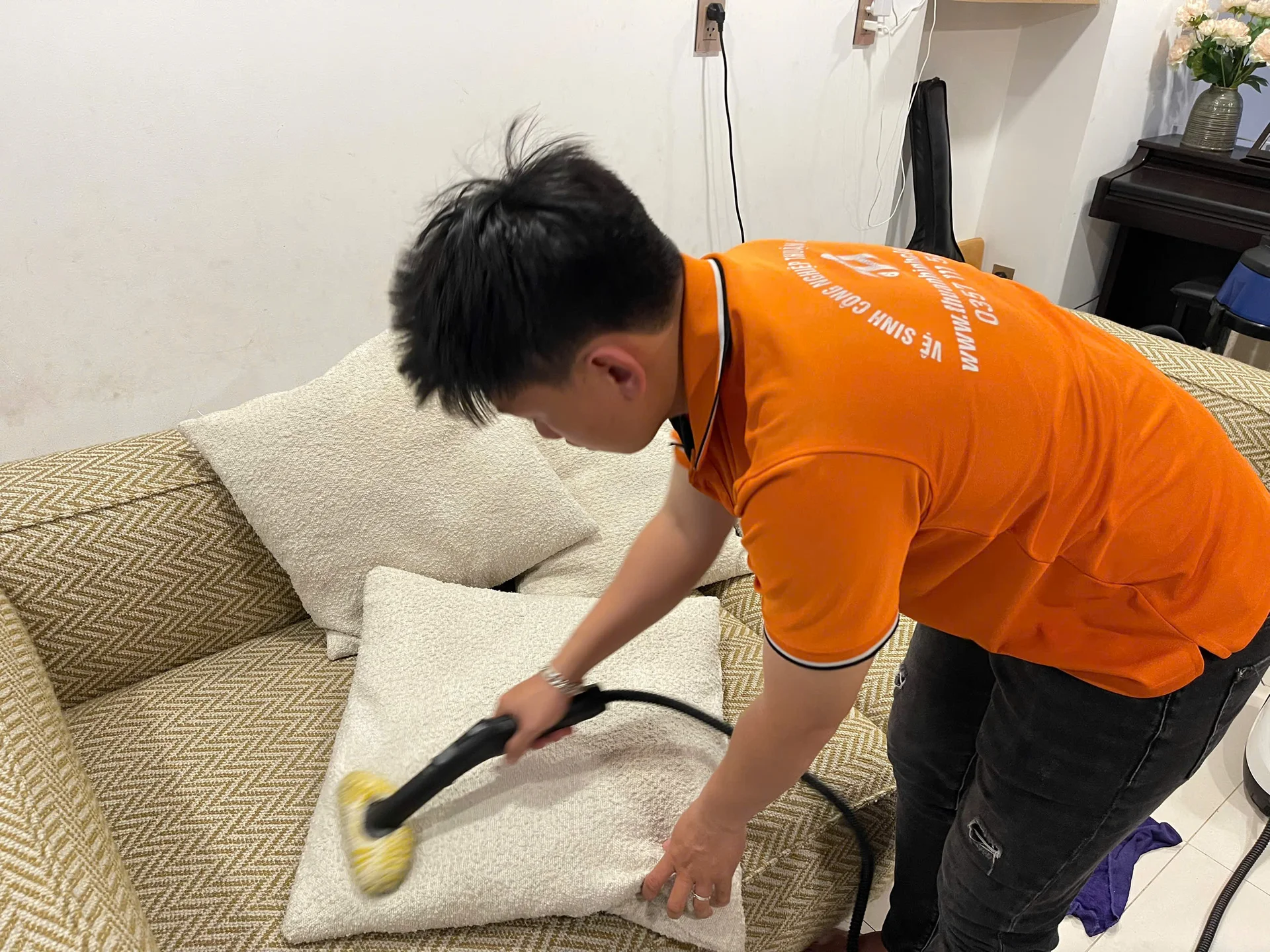
At your home, our technician checks the tag and fabric type and tests the solution on a hidden spot before treating the stain. The coffee is loosened with a cleaner suited to that fabric, then an extraction machine pulls the residue out of both the fabric and the foam. We clean the whole cushion panel rather than just the spot, so it dries evenly without rings or patches.
We're also honest about the limits: fresh coffee stains usually respond well, but stains that are weeks old, or that have been scrubbed or bleached, may only fade rather than disappear. At-home sofa cleaning costs 250,000 VND for a single seat, 300,000 VND for a 2-seater, 350,000 VND for a 3-seater and 400,000–650,000 VND for an L-shaped sofa. Final prices depend on the fabric and condition; send photos via WhatsApp or Zalo at 0357 111 566 for an exact quote before we start.
How to Prevent Coffee Stains on a Fabric Sofa
- Use a lidded cup or travel mug when drinking coffee on the sofa.
- Keep a tray or side table next to the sofa instead of balancing cups on the armrest.
- Keep white towels or paper towels in the living room so you can blot right away.
- Cover the most-used seat with a washable throw.
- Vacuum the sofa weekly so spills don't mix with dust into darker stains.
- Have the sofa cleaned every 6–12 months, or every 3–6 months with young kids or pets.
To find the right cleaning schedule for your household, read How Often Should You Clean Your Sofa?
FAQs About Coffee Stains on Sofas
Need Sofa Stain Removal in Ho Chi Minh City?
If the coffee stain has dried, spread or started to smell sour, send a photo of your sofa via WhatsApp or Zalo at 0357 111 566 and Thuan High Clean will give you a quote upfront, with no hidden charges. We clean sofas on-site anywhere in Ho Chi Minh City (Saigon) from 8:00 AM to 5:00 PM, and we'll redo the job for free within 3 days if any odor remains. You can also reach us through our Contact page.
"Doan Xuan Thuan Founder of Thuan High Clean"
— This article is based on hands-on experience from our professional sofa, mattress, carpet and curtain cleaning services. Every article is reviewed to make sure the information is accurate, practical and reliable for homeowners and businesses in Ho Chi Minh City.