
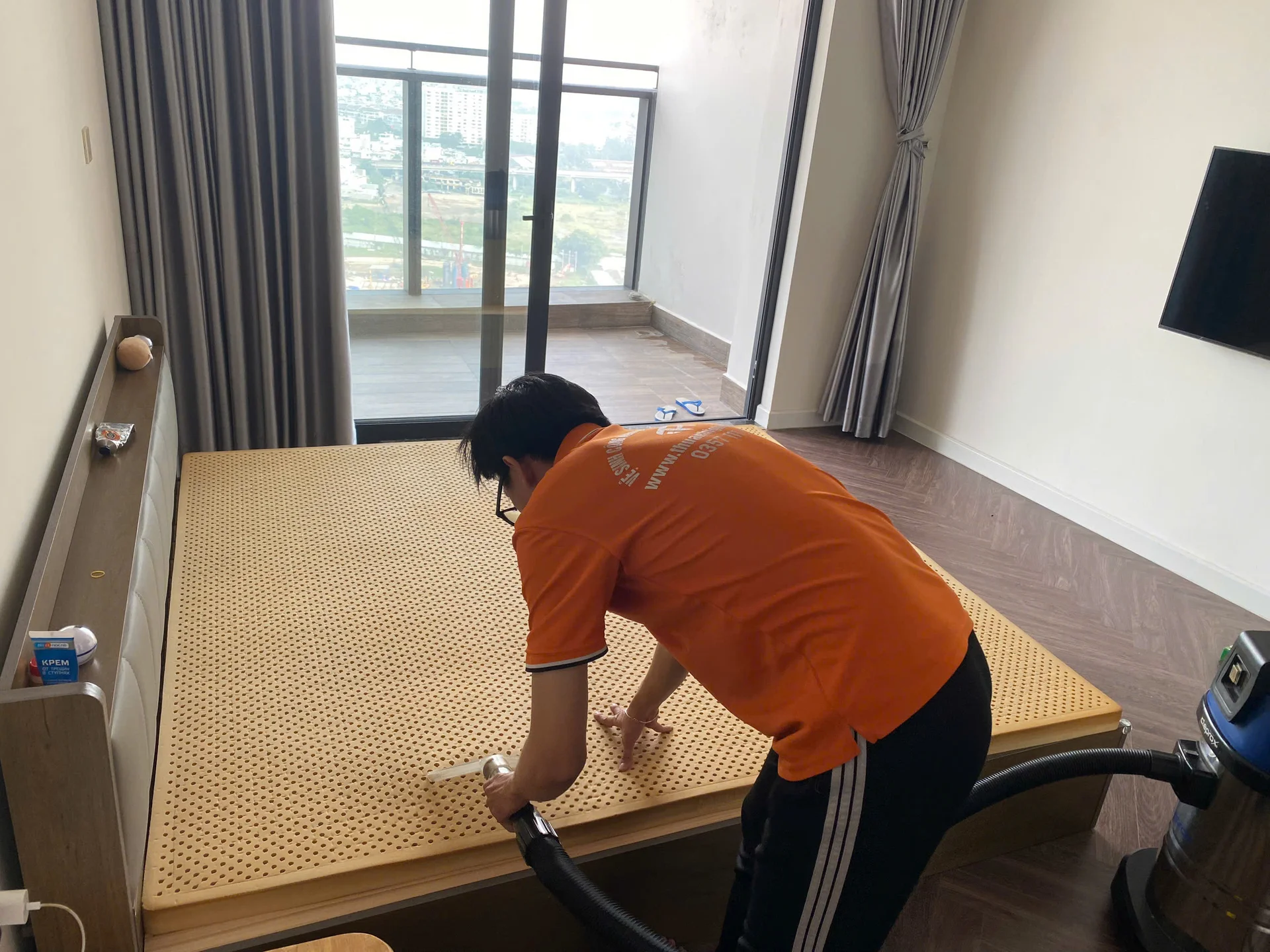
Can a Natural Latex Mattress Be Cleaned?
Yes, but not the way you'd wash most things. The cover (usually the zippered outer layer) can often be removed and washed according to its care label. The natural latex core itself should never be soaked, machine washed or left in strong sun. It should only be vacuumed, spot cleaned with very little moisture or cleaned with a professional extraction machine.
Natural latex is made from rubber tree sap and is full of tiny pinholes that let it breathe. Once water gets in, a 10–20 cm (4–8 in) latex core takes a very long time to dry, and in Ho Chi Minh City's hot, humid climate that can lead to odors and mold inside. On the other hand, heat, UV light and harsh chemicals make latex age faster, turn yellow, become brittle and crumble.
In this article, Thuan High Clean explains which parts of a latex mattress can be washed, how to clean a natural latex mattress at home step by step, how to handle common stains, the mistakes that ruin latex and when it's worth calling a professional.
Quick Summary
- Do: wash the cover per its label, vacuum regularly, spot clean with suds or a damp cloth and dry in a shaded, airy spot.
- Don't: soak it, machine wash it, leave it in strong sun or use steam, a hair dryer, bleach or hydrogen peroxide on the latex core.
- Old stains, urine smells or possible mold: professional extraction cleaning is the safer choice.
Why Does Latex Need Different Care?
Natural latex mattresses are durable and supportive, but they're also the fussiest type to clean. Here are four things to know before you start:
Latex Doesn't Like Sun or Heat
UV rays and heat oxidize latex. The surface turns yellow, loses its bounce and slowly becomes brittle, cracked and crumbly. That's why putting a mattress out in the sun, a common habit in Vietnam for cotton mattresses, actually damages latex. Steam, hot water, hair dryers and irons have a similar effect.
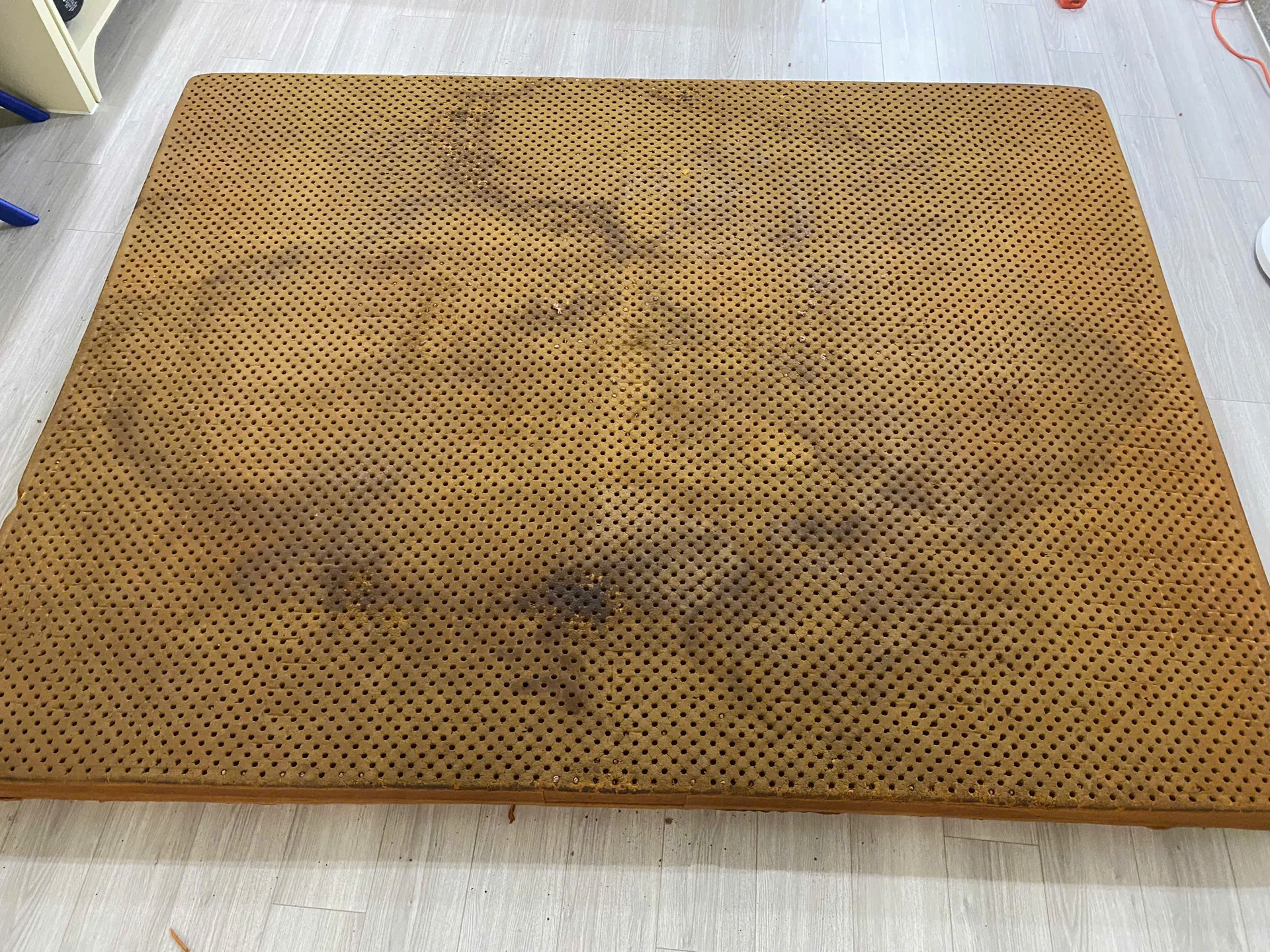
The Core Absorbs Water and Dries Slowly
The ventilation holes keep you cool at night, but they also let water seep deep into the core. The outside may feel dry after a few hours while the inside stays damp for days, especially during Ho Chi Minh City's rainy season or in apartment bedrooms with little airflow. This is the main reason latex mattresses start to smell or grow mold after a DIY wash.
Harsh Chemicals Break Latex Down
Chlorine bleach, hydrogen peroxide, solvents such as gasoline, kerosene or concentrated alcohol, and strong acidic or alkaline cleaners can discolor latex, make it sticky or crack the surface. Stick to diluted dish soap or a pH-neutral cleaner.
It's Heavy and Tears Easily When Moved
A double-size latex mattress can weigh 30–50 kg (65–110 lb), and much more when wet. Pulling it by one corner or folding it in half can easily tear the latex. When you need to flip or move it, have two people lift it evenly from both sides.
Which Parts Can Be Washed and Which Can't?
A latex mattress is usually made up of a latex core and an outer cover. Each part needs a different approach:
| Part | Washable? | How to Clean It |
|---|---|---|
| Zippered cover | Yes, per care label | Cold water, gentle cycle, dry in the shade |
| Cover sewn to the core | Surface cleaning only | Vacuum, dab with suds, low-moisture extraction |
| Natural latex core | No soaking or machine washing | Vacuum, damp cloth, professional extraction |
| Thin latex topper | No soaking | Same as the core; handle gently, it tears more easily |
| Protector, sheets, pillowcases | Yes | Machine wash every 1–2 weeks |
Check the Manufacturer's Label First
Every brand has its own care instructions, usually on the sewn-in label or in the warranty booklet. Cleaning it the wrong way (soaking, sun-drying, etc.) may void your warranty.
How to Clean a Natural Latex Mattress at Home
The steps below work for routine cleaning and light stains. The golden rule throughout: minimal water, no heat, no harsh chemicals.
Step 1: Strip the Bed and Wash the Cover
Remove the sheets, protector and the cover if it has a zipper. Wash the cover according to its label, usually cold water on a gentle cycle with no bleach. Hang it in a shaded, breezy spot and skip the hot dryer, since the fabric can shrink and become hard to fit back on. Only put it back once it's completely dry.
Step 2: Vacuum the Latex Core
Use a vacuum with a soft upholstery brush at medium suction and go over both sides and the edges. Don't press the nozzle hard into the surface, as soft latex can tear or dent.
Step 3: Deodorize With Baking Soda
Sprinkle a thin layer of baking soda over the surface and leave it for 4–8 hours to absorb moisture and odors, then vacuum it up. It's a gentle, water-free way to freshen latex.
Step 4: Spot Clean With Soap Suds
Add a few drops of dish soap to cool water and stir until sudsy. Dip a clean cloth into the suds only, not the water, and dab the stain from the outside in without rubbing. Then wipe with a well-wrung damp cloth to remove soap residue and blot dry right away with a dry towel.
Step 5: Dry in a Shaded, Airy Spot
Open the windows and run a fan, or set the air conditioner to dry mode, and let the mattress air-dry. You can raise it on a slatted bed base or a few wooden boards so the underside gets airflow, but don't stand it upright for long, since heavy, soft latex can sag out of shape. Only make the bed again once it no longer feels cool or damp to the touch.
Never Do This
Don't spray water directly on it, soak it, put the latex core in a washing machine or leave it in strong sun, and never use a steam cleaner, hair dryer or iron on a latex mattress.
How to Treat Common Stains on Latex
The sooner you act, the easier the stain comes out and the less water you need. Here's a quick guide to latex-safe treatments:
| Stain | Latex-Safe Treatment | Avoid |
|---|---|---|
| Sweat, light yellowing | Baking soda, then dab with dish soap suds | Hydrogen peroxide, bleach |
| Child or pet urine | Blot immediately, dab 1:2 diluted vinegar, then baking soda | Adding more water, hot water |
| Blood | Dab with cold water and a little soap | Hot water, hard scrubbing |
| Coffee, tea, soft drinks | Blot right away, dab with dish soap suds | Rubbing, which spreads the stain |
| Small surface mold spots | Vacuum, wipe gently with diluted vinegar, dry well | Strong sun, soaking |
If the yellow stains are old, read Can Yellow Stains on a Mattress Be Cleaned? to see what can realistically be removed.
Common Mistakes That Ruin a Latex Mattress
Putting It Out in Strong Sun
Sun-drying works for cotton mattresses, but just a few sessions in strong sunlight can leave latex yellowed, brittle and covered in fine cracks. If you want to air it out, put it on a shaded balcony or anywhere with a breeze but no direct sun.
Spraying or Pouring Water on It
Water seeps into the core through the pinholes and gets trapped inside, causing sour or musty smells and hidden mold. Always use suds or a well-wrung cloth instead of liquid.
Using Steam or a Hair Dryer to Sanitize or Speed Drying
Steam pushes both heat and moisture into the latex, the two things it handles worst. Hair dryers and irons can make the surface sticky or warp it in spots.
Using Bleach, Hydrogen Peroxide or Strong Cleaners
These may work on ordinary fabric, but they discolor latex and break it down quickly. Above all, never mix bleach with vinegar or ammonia-based products, as this can release toxic gas.
Folding or Dragging It When Moving
Latex handles compression well but not pulling. Folding it, dragging it by a corner or strapping it too tightly for transport can tear the core, and tears in latex usually can't be repaired.
When to Call a Professional
Home cleaning is great for upkeep and small, fresh stains. Consider professional latex mattress cleaning if any of these apply:
- ✓Stains are still clearly visible after 2–3 DIY attempts
- ✓The mattress smells of urine, sourness or mildew even after deodorizing
- ✓Water or urine has soaked deep into the latex core
- ✓You see black or green spots that may be mold
- ✓Someone in your home is a young child, elderly or prone to allergies
- ✓The mattress hasn't had a deep clean in more than a year
How Does Thuan High Clean Clean Latex Mattresses?
For natural latex mattresses, our technician first checks the label and the condition of the core and cover. We vacuum, pre-treat stains with a pH-neutral, latex-safe solution, then use an extraction machine on a low-moisture setting to pull out dirt without soaking the core. We don't use steam on latex, and we'll show you how to let the mattress finish drying afterward.
We're also honest about the limits: most stains and odors improve noticeably, but latex that has yellowed with age won't turn white again, and a cracked or crumbling core can't be restored by cleaning. At-home mattress cleaning costs 300,000–500,000 VND per mattress (roughly US$11–19, estimated) depending on size, with a free inspection and quote before we start. Learn more on our Mattress Cleaning Service page.
How to Keep a Latex Mattress Clean and Long-Lasting
- Always use a waterproof mattress protector and wash it every 1–2 weeks with your bedding.
- Vacuum the mattress monthly and rotate it head-to-foot every 3–6 months so it wears evenly.
- Keep the bedroom ventilated, and use your air conditioner's dry mode during the rainy season.
- Don't lay the mattress directly on a tiled floor; use a slatted base or a frame with airflow.
- Blot every spill or accident right away instead of waiting for it to dry on its own.
- Book a deep clean every 6–12 months, or more often if you have young kids or pets.
For a detailed price breakdown by mattress size, see our Mattress Cleaning Service page.
FAQs About Cleaning a Latex Mattress
Need Latex Mattress Cleaning in Ho Chi Minh City?
If your latex mattress has old stains, a lingering smell or water damage, let Thuan High Clean inspect it and give you a free quote before any work begins. Call or message us on Zalo at 0357 111 566 to book on-site mattress cleaning anywhere in Ho Chi Minh City (Saigon), or reach us through our Contact page.
"Doan Xuan Thuan Founder of Thuan High Clean"
— This article is based on hands-on experience from our professional sofa, mattress, carpet and curtain cleaning services. Every article is reviewed to make sure the information is accurate, practical and reliable for homeowners and businesses in Ho Chi Minh City.